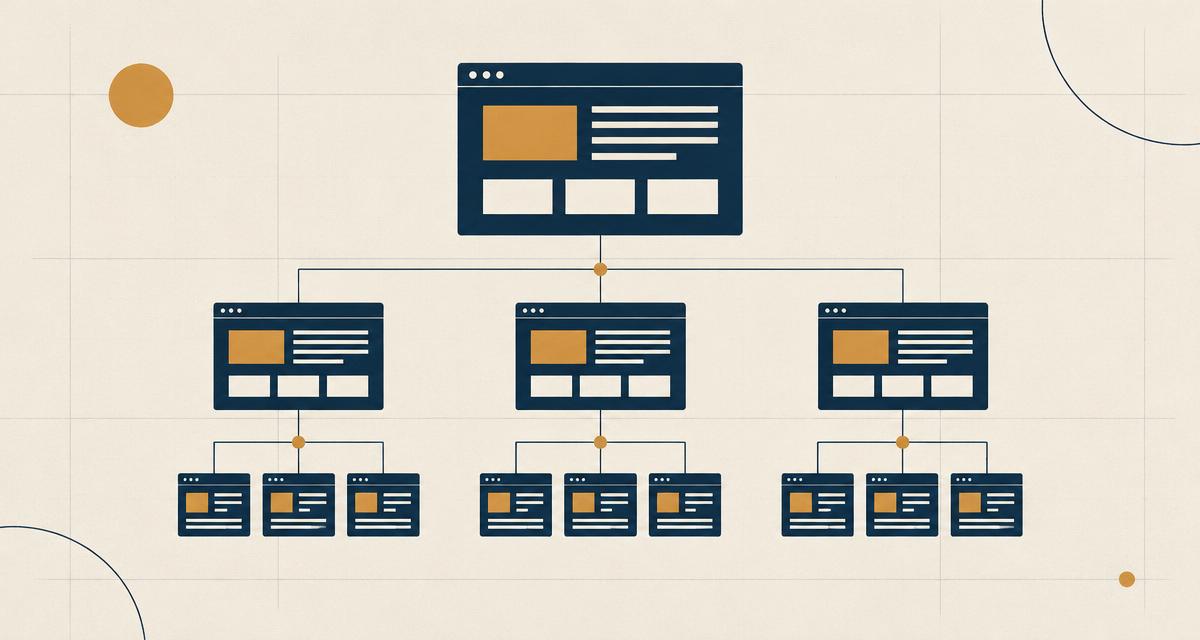
A site plateaus in search long before anyone runs out of things to write about. What usually runs out first is structure: nothing on the site tells a crawler, or a buyer, which page is the definitive one on a topic.
## Start from demand, not from your service list
Group the queries you actually want into a small number of topics, then decide which single page owns each one. Every other page on that topic exists to support it, links up to it, and never competes for the same query. This is usually a consolidation exercise, not a publishing one.
## Give each hub a job and a link budget
A hub page needs enough internal links pointing at it to look important, and it needs to pass authority down to the specific pages beneath it. Decide the links deliberately: in body copy, from related pages, and from the pages that already earn links. Navigation alone is a weak signal.
## Prune before you publish
Thin pages that duplicate a hub cost you more than they earn. Merge them into the hub, redirect them, and keep one strong URL. Do this before the next content cycle, or you will spend the cycle competing with yourself.
Where this applies
- SEO
Work with Northbeam Studio
This guide comes from the work Northbeam Studio does. See what they offer, the results they can evidence, and how to start a conversation.
More from Northbeam Studio
- GuideFinding wasted spend in a neglected search accountA two-hour pass that reliably finds 15–30% of recoverable spend in accounts nobody has touched for a while, in the order we work through it.
- DocumentationSearch term hygiene: a weekly thirty-minute routineThe standing weekly routine we run on every search account: which reports to open, what to negate, what to promote, and what to deliberately leave alone.
- PlaybookA landing page experiment system for paid trafficPaid traffic gives you enough volume to learn quickly and enough cost to punish guessing. This is the intake, prioritisation and readout process we run so tests compound instead of resetting every quarter.
- FrameworkAllocating a B2B paid budget across three channelsSearch captures existing demand, professional social creates it, and retargeting only finishes what the other two started. A budget that ignores those roles will always look inefficient somewhere.
- GuideAdvertising on community forums without being rejectedCommunity platforms punish marketing language faster than any other channel. The creative that works reads like a useful comment and the targeting is subject-first, not demographic.
- PlaybookBuilding an account-based audience worth advertising toUploading a list is not targeting. This is how we build, size and refresh account lists so professional social spend reaches the buying committee rather than the whole industry.